Quick Answer:
A captioner is a person who creates captions for spoken audio in videos, TV programs, live events, meetings, and other media. A captioner converts speech into readable text and may also add speaker names, important sounds, and timing so viewers can follow the content easily.In simple terms, a captioner is someone who creates captions. Unlike a caption, which is the written text itself, a captioner is the person who produces it.
If you searched for captioner meaning, a captioner is a person who creates captions for spoken audio so viewers can read what people say. Captioners may also include important sounds, speaker changes, and other details that help people understand audio content.
The word can describe professionals who work on videos, television programs, live events, meetings, webinars, and other media. The exact job can vary depending on whether the captions are created before publication or produced live.
What Does Captioner Mean?
A captioner is someone who creates captions for spoken content.
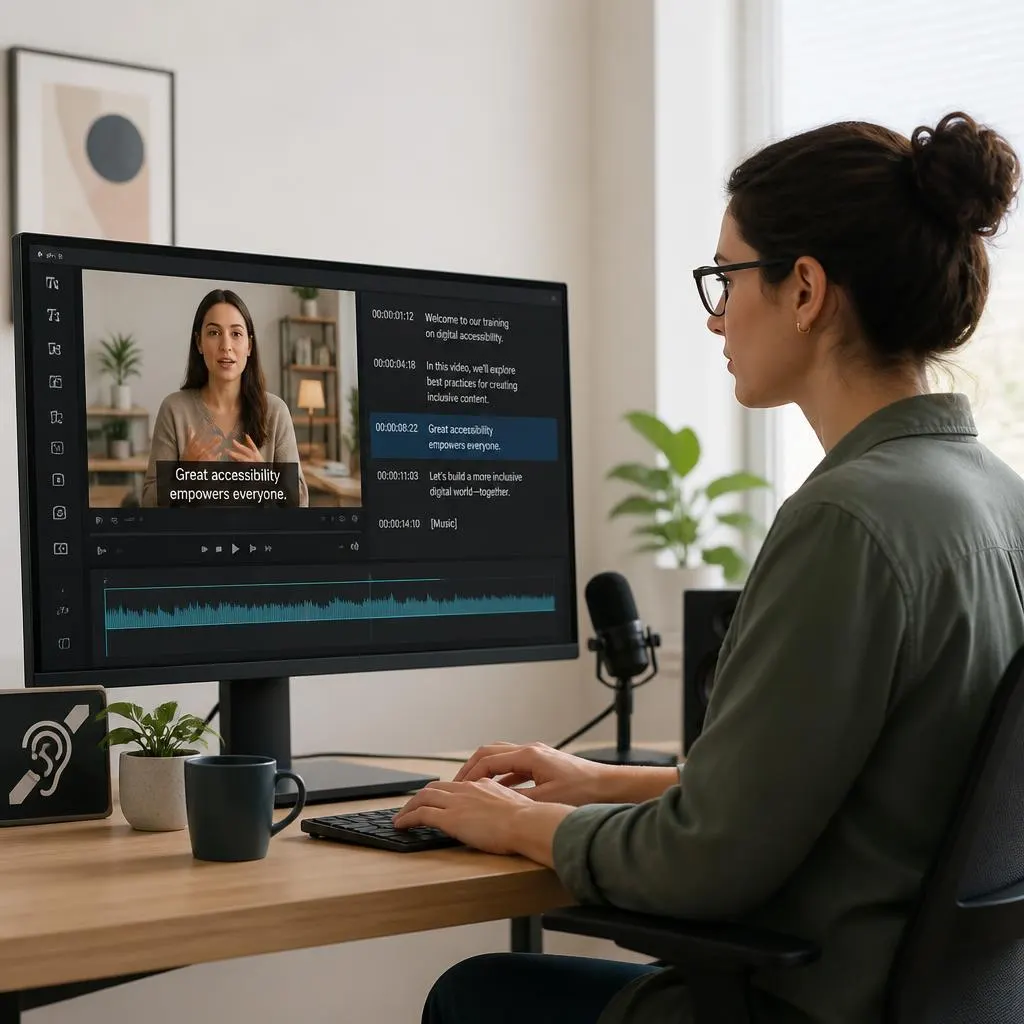
Captions turn dialogue and relevant audio information into written text that appears on a screen. A captioner may listen to speech, type the words, synchronize text with the audio, and identify useful sounds or speakers.
For example:
- A captioner prepares captions for a YouTube video.
- A live captioner creates text during a conference.
- A television captioner synchronizes dialogue with a broadcast.
- A captioner adds speaker labels when several people talk.
In simple terms, captioner means a person who creates captions.
Captioner Meaning in Simple English
The easiest definition is:
Captioner: A person who creates written captions for spoken audio.
Think of a captioner as someone who helps turn spoken words into readable text on a screen.
For recorded content, the captioner may have time to review the audio, correct mistakes, and synchronize the captions carefully. For live content, the captioner must work quickly while people are speaking.
Captioner vs. Caption
These words sound related because they are.
| Term | Meaning |
|---|---|
| Caption | Written text displayed with video or other media |
| Captioner | Person who creates captions |
| Captioning | The process of creating and displaying captions |
| Captioned video | A video that includes captions |
For example, caption refers to the written text, while captioner refers to the person who creates it.
What Does a Captioner Do?
A captioner’s work involves more than simply typing every word.
Depending on the project, a captioner may:
- Listen carefully to spoken dialogue.
- Transcribe what speakers say.
- Synchronize captions with the audio.
- Correct spelling and grammar.
- Identify different speakers.
- Include important sound information.
- Follow captioning style guidelines.
- Check captions for timing and accuracy.
- Format captions so they remain easy to read.
- Create captions for recorded or live content.
Good captioning keeps the text synchronized with the conversation and makes the content easier to follow.
Captioner Meaning in Different Contexts
The meaning stays fairly consistent, but the work changes depending on the setting.
Captioner for Videos
A video captioner creates captions for recorded content such as interviews, tutorials, educational videos, social media videos, and online courses.
They usually have access to the complete recording, which allows them to review the content before publishing it.
Live Captioner
A live captioner creates captions while an event happens.
Live captioning can appear during:
- Conferences
- Classes
- Webinars
- Meetings
- News broadcasts
- Public events
- Online streams
Because the speaker continues talking while the captioner works, speed and accuracy both matter.
Television Captioner
Television captioners prepare or produce captions for broadcast programs.
Depending on the production, captioning may happen ahead of time or during a live broadcast.
Freelance Captioner
A freelance captioner works independently for clients or through captioning platforms.
They may caption:
- YouTube videos
- Podcasts
- Training materials
- Interviews
- Marketing videos
- Online courses
- Social media content
What Is the Difference Between a Captioner and a Transcriptionist?
A transcriptionist generally converts spoken audio into written text. A captioner takes that text or speech and prepares it for display alongside video or another visual presentation.
The roles can overlap, especially with recorded content.
| Captioner | Transcriptionist |
|---|---|
| Creates captions for viewing with media | Creates written transcripts |
| Focuses on timing and readability | Focuses mainly on accurate transcription |
| May identify speakers | Often identifies speakers |
| May include important sounds | May include sounds depending on the assignment |
| Works with video and live media | Can work with audio or video |
Some professionals perform both types of work.
Captioner vs. Subtitler
Captioners and subtitlers both work with text displayed alongside video, but their goals can differ.
Captions generally aim to make spoken content and relevant audio information accessible to viewers. Subtitles traditionally focus more on translating or representing dialogue, especially for viewers who speak another language.
For example, captions might identify an important sound such as a door closing, while subtitles for a translated film may focus primarily on the spoken dialogue.
The distinction can vary across industries and regions, so the terms sometimes overlap.
What Skills Does a Captioner Need?
Strong captioners need several practical skills.
Excellent Listening
A captioner must understand speech accurately, including different accents, speaking speeds, and background noise.
Fast and Accurate Typing
Speed matters, especially for live captioning. Accuracy remains essential because small errors can change the meaning of a sentence.
Strong Language Skills
Good spelling, grammar, punctuation, and vocabulary help produce clean captions.
Attention to Timing
Captions need to appear and disappear at appropriate moments. Poor timing can make even accurate captions difficult to follow.
Knowledge of Captioning Standards
Professional captioners often follow specific formatting and accessibility guidelines.
Concentration
Long recordings and live events require sustained attention.
How Does Captioning Work?
The exact process depends on the type of project, but recorded captioning often follows a simple workflow:
- The captioner receives the video or audio.
- They listen to the spoken content.
- They transcribe the dialogue.
- They divide the text into readable caption segments.
- They synchronize each segment with the audio.
- They add relevant speaker or sound information.
- They review the captions for errors.
- The finished captions are delivered or published.
Live captioning follows a faster process because the captioner works while the event is happening.
Examples of Captioner in a Sentence
Seeing the word in context makes its meaning easier to understand.
- The captioner prepared accurate captions for the documentary.
- We hired a captioner for the online conference.
- The captioner synchronized the dialogue with the video.
- A live captioner provided real time text during the meeting.
- The production team worked with a professional captioner.
- The captioner corrected several timing issues before publication.
- The video company needed a captioner for its training materials.
- The captioner identified each speaker clearly.
- A skilled captioner can make video content easier to follow.
- The captioner added important sound information to the video.
Why Are Captioners Important?
Captioners help make spoken content accessible in situations where viewers may not hear or understand the audio clearly.
Captions can also help people who:
- Watch videos in quiet places.
- Watch content with the sound turned off.
- Have difficulty hearing audio.
- Speak English as an additional language.
- Need to follow technical or educational content visually.
- Watch videos in noisy environments.
For creators and organizations, accurate captions can also improve the overall viewing experience.
Where Do Captioners Work?
Captioners can work across many industries.
Common areas include:
- Television and broadcasting
- Education
- Online learning
- Corporate training
- Conferences
- Government events
- Entertainment
- Social media
- Video production
- Accessibility services
Some captioners work for companies, while others work independently as freelancers.
Is a Captioner the Same as an AI Captioning Tool?
No.
A captioner traditionally refers to a person who creates captions. An AI captioning tool uses speech recognition technology to generate captions automatically.
Automated tools can produce captions quickly, but they may make mistakes with:
- Names
- Accents
- Technical terms
- Background sounds
- Multiple speakers
- Fast speech
- Unclear audio
Human captioners can review and correct these errors, which can make the final captions more accurate.
Captioner Meaning on Social Media
On social media, captioner can still refer to someone who creates captions, but casual users may use the word differently.
For example, someone might describe themselves as a captioner because they write captions for social media posts. However, in professional accessibility and media contexts, the term usually relates to creating captions for spoken audio or video.
This distinction matters because a person who writes creative Instagram captions is not necessarily doing professional video captioning.
Is Captioner a Job?
Yes. Captioner can be a professional job title.
Professional captioners may work with media companies, accessibility providers, educational institutions, event organizers, broadcasters, or freelance clients.
Their responsibilities depend on the role. Some specialize in recorded content, while others focus on live captioning.
Captioner Meaning in Accessibility
In accessibility, a captioner helps make audiovisual content easier to access by providing written representations of spoken dialogue and relevant audio information.
For example, captions can communicate:
- Spoken dialogue
- Speaker changes
- Important sound effects
- Music information when relevant
- Other meaningful audio details
This makes captions particularly useful for viewers who cannot rely entirely on audio.
Common Mistakes When Understanding Captioner
A few misunderstandings often appear around this word.
Mistake 1: Thinking Captioner Means Caption
A captioner is the person, while a caption is the text.
Mistake 2: Assuming Every Captioner Writes Instagram Captions
The word can apply to people who create social media captions, but professional usage often refers to video and accessibility captioning.
Mistake 3: Thinking Captioning Only Means Transcription
Captioning often involves timing, formatting, speaker identification, and relevant sound information in addition to transcription.
Mistake 4: Assuming Automatic Captions Always Need No Review
Automatic speech recognition can produce useful first drafts, but errors can occur. Human review can improve accuracy and readability.
FAQs
What does captioner mean?
Captioner means a person who creates captions for spoken content. A captioner may work with recorded videos, television programs, live events, meetings, or other media.
What is a captioner in simple words?
A captioner is someone who turns spoken words into written captions that viewers can read on a screen.
Is a captioner a person?
Yes. The word captioner normally refers to a person who creates captions.
What is the difference between a captioner and a caption?
A caption is the written text displayed with media. A captioner is the person who creates that text.
What does a live captioner do?
A live captioner creates captions while someone is speaking during a live event, meeting, broadcast, class, or other real time situation.
Is captioner a real job?
Yes. Captioning is a professional field, and captioners can work in broadcasting, education, accessibility, events, media production, and freelance services.
Can AI be a captioner?
AI tools can automatically generate captions, but captioner traditionally refers to a person. Human professionals can also review and correct automatically generated captions.
What does a captioner do for videos?
A video captioner transcribes dialogue, synchronizes text with speech, formats captions, identifies speakers when needed, and may include important audio information.
Is a captioner the same as a subtitler?
Not always. Captioners generally focus on making spoken content accessible through captions, while subtitlers often work with dialogue translation or text representation for another language. The terms can overlap depending on the industry.
How to Remember the Meaning
A simple way to remember the word is:
Caption = the text.
Captioner = the person who creates the text.
Captioning = the process.
Once you understand that distinction, the word becomes easy to recognize in professional, media, and accessibility contexts.
conclusion
The captioner meaning is simple: a captioner is a person who creates captions for spoken content. Their work can involve transcription, timing, formatting, speaker identification, and relevant audio details.
Captioners play an important role in video, broadcasting, education, events, and accessibility. Whether the content comes from a recorded video or a live event, accurate captions help more people understand and follow what they see and hear.